Walking on clouds

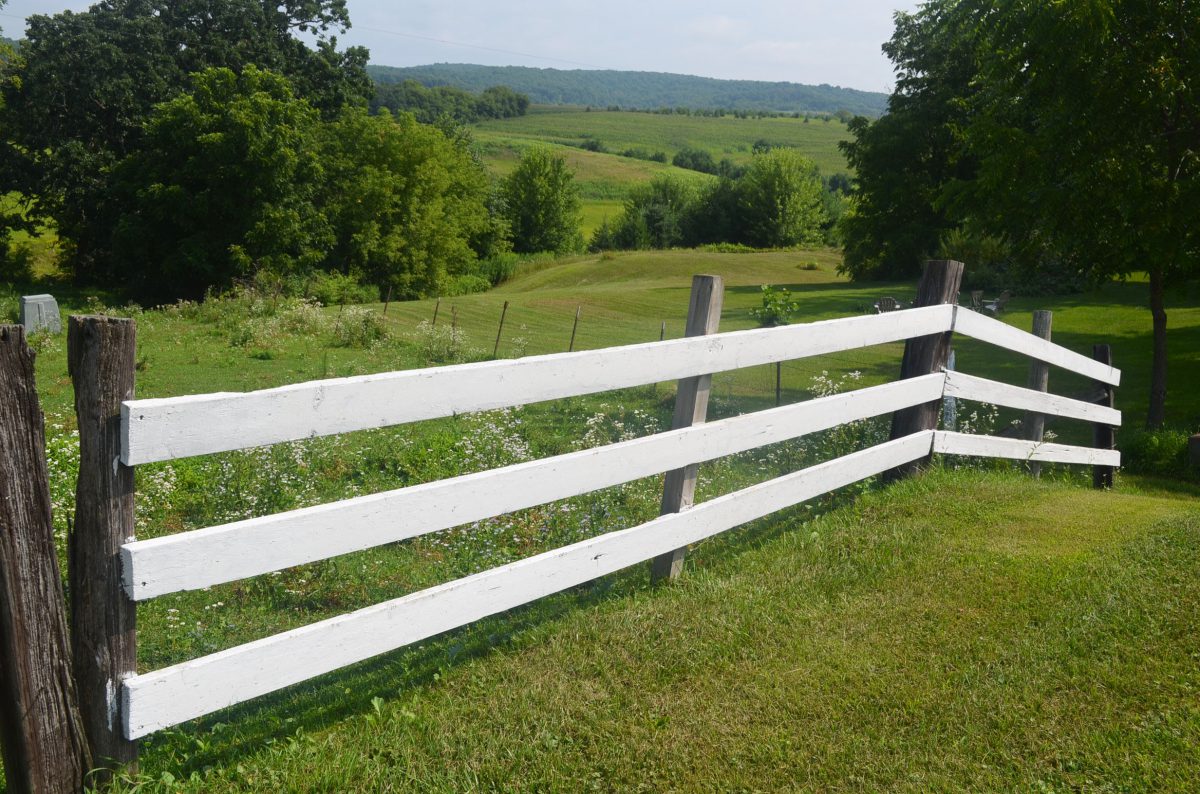
The coffee’s aroma had an extra perkiness early morning as I sat on a Leopold bench to drink in what I could of the northern Driftless Area’s countryside, or at least that which I could observe from our farm on the Eimon Ridge.

That perkiness came with a welcomed snap of cool air that arrived with this next-to-the-last day of August, it moving my mind’s calendar ahead 23 days to the autumn equinox. But summer it remains, even with the heavy steam the coffee created in the coolness trying to hide summer’s final bright burst of green shades framed below the azure morning sky.

We’d survived the few days of steamed summer heat that pressed down upon us; we’d survived the shower-room dampness of the previous days’ heat, humidity and rain. With August’s demise so often comes summer’s demise, and this morning was telling me that could be the case again this year.

I did what I suspect many would do in such a situation: holding my coffee mug up to my mouth and looking through the steam to the fog that covered the Timber Creek valley below our ridge. And, as people are apt to do, I allowed my mind to momentarily drift in the coffee’s clouds, all the way down onto the valley’s clouds.

A person who grew up in this neighborhood – who now resides in flatter lands a bit to the east of here – mentioned the other day how she’d always loved looking down from a ridge and onto a valley’s fog just as I was doing this morning. As she spoke, I pictured in my memory such mornings when the fog-so-thick covered all but the treetops in the valleys.

I allowed myself a ride on the coffee’s clouds, it carrying me down the ridge’s slope and onto the top of the valley’s fog. I tested the fog’s sturdiness and, with some trepidation, took a first step out onto it.

The fog had the firmness of sphagnum moss, a fluffy waterbed of cushion beneath my feet. And, on it, I roamed the valley from treetop to treetop, greeting the morning’s birds on the branches below and appraising the different green shades as seen from above instead of from below.

I checked each leaf to see whether there were hints of fall’s early start, finding some golden leaves appearing on some aspens but most leaves not ready to give up summer’s life.

A cardinal’s call from one of the old catalpas near my Leopold bench snatched me back from that fantasy cloud walk and dropped me back onto the real side of the coffee’s cloud.

There would, after all, be no walk on the valley’s fog – at least during this lifetime. Today, as with the rest of my days on this majestic ridge, I’m left with only wondering how such a walk would feel.

I contemplated how many others I’ve known as family, friends, acquaintances or other folks might ever have taken a moment to wonder what can come with the clouds draped upon a northern Driftless Area valley. Some I’ve known would shake their head in disbelief that anyone would waste time over that sort of consideration; some would offer to walk with me; some would flatly question my sanity. And some would suggest that I get my up from that bench, put my coffee mug away and get along with the day’s work.

Whether others choose to allow themselves into such thought isn’t of my concern, I decided. Those clouds are among those wonders about which I choose to consider, whether others agree or disagree that I should.

The sun started rising higher on the east horizon, warming the air a bit and starting to pull that foggy white quilt from the valley. Old, familiar trees and grasses started to appear and diamond-sparkle the morning’s dew on their green shades. The clouds from my coffee disappeared as the coffee cooled and the air warmed.

I swallowed the last of the coffee as I rose from the bench, looking around to realize that the birds had started to flitter around my feeding stations, them happy my attention to the valley’s clouds had allowed them to gobble seeds without interruption.

The birds exploded to their refuges in farmyard trees and bushes as I walked toward the house to deposit my coffee mug and get on with my work. I stopped to look back and hope those birds would be OK hanging out with me again tomorrow and the days after while I sit and daydream about the fog in the valley below.
Walnuts on the shed’s roof

The loud bang on our machine-shed’s roof nearly made me jump out of my work-shoes the other day when yet another black walnut fell from a tree and hit the roof’s steel.

A person might expect to have become accustomed to things that happen out there, but it never seems to be the case. No matter how much I prepare myself, that shed seems to be a place that continues to surprise me.

The surprises can start when I fling open its big overhead door. As I do that, I brace myself this time of the year for seeing some crickets and grasshoppers bounding to and fro – me always wondering what might attract them to the door’s base. And, I always worry that a snake that’s been known to sun itself or cool itself along the door, depending on which side the critter is lying, will slither away (oh, how I hate those things).

I know when I enter the shed that I’ll walk into some cobwebs and have to deal with some cobwebs on the work-bench, even if I’d cleared them out only the previous day.

And, of course, there are times during the warmer seasons when the rain snare-drums loudly onto the shed’s steel roof. Anyone who’s ever been in a steel pole-shed when the rain falls knows how a light drizzle can be amplified to sound like a torrential rain of softballs falling from the sky; a heavy rain is deafening.

My father, were he still around, might tell me to stop thinking about being startled by the shed’s noises and get back to my task-at-hand. Perhaps it’s that way in people raised in other walks of life, but that seemed to be one of my pa’s great retorts while I was growing up on our family dairy farm a bit to the east of here.

Even more likely would be the notion espoused by so many that my shed-noises are examples of the need to expect the unexpected. I’ll argue, though, we can expect the unexpected but still be startled, hurt, or even saddened when the unexpected happens.

We have some big doses of the unexpected slapping us around in these parts. No matter how much we’ve prepared ourselves to expect such unexpected things, they still have managed to startle us and kick us in our collective guts.

We know that terrible rains could hit, dumping 2 inches, 5 inches, 7 inches or more of rain onto us in a few hours.

We know that heavy rains could swell our coulees’ wetlands, creeks and rivers.

We know rain-swollen wetlands creeks and rivers could cause some of our communities to flood, damaging homes and businesses.

We know that heavy rains could wash out our crops and roads a couple of times.

We know to expect an occasional dose of high winds that, in moments, can tear up trees and knock down buildings throughout our northern Driftless Area.

We know that, just as we get too much rain, there are times of drought.

We know to expect extreme cold of winter and extreme heat of summer; blizzards and parched soil.

We know to expect the illness or losses of family and friends, and that there could be accidents on the highways, farms, industries and homes that will bring great pain and grief.

In all of those things, we know to expect for the unexpected and can plan to keep moving forward to get the work done, as my father would have suggested. But when those unexpected things happen, I think it’s OK for us to react the same way I react when those black walnuts drop onto my shed’s roof, or when I walk into one of its spider-webs, or am startled by a cricket or grasshopper or snake.

When those unexpected things strike us, we will proverbially jump out of our work-shoes and somehow be surprised that they happened. Who’s to tell us we’re not allowed that reaction?

We’re allowed the reactions but nonetheless get back to work.

After a deep breath we collectively gather ourselves and return to the tasks-at-hand. Indeed, the resilience of human nature might be the greatest thing I note about people in these parts – or in any parts, for that matter – when the unexpected arrives.

We, the people of the soil, settle back into our work-shoes and lace them up even more tightly.

Black walnuts always will fall onto our sheds’ roofs and make us jump, but we always recover. And then, we get back to work.

— Scott Schultz

Stars above politics

It’s refreshing each August to hear people talk about looking up at the stars instead of arguing about politics and other maladies. All that talk about politics tends to drive folks to look down around their feet after a while.

The reports that a meteor shower was a big enough deal that it took so many momentarily away from all that television and Internet talk about who’s the worse political liar and who can lay out the grandest promises that can never be met. I’d guess that most people would rather see the meteoric version of falling stars than the political version of falling stars.

I can’t say for sure how much people out here in the northern Driftless Area tend to look at the stars – or, for that matter, the daytime sky – on a regular basis. But I suspect it’s more than the average folks from sea to shining sea who tend to look up.

We generally don’t need a meteor shower to get us to look at the stars in these parts, even if the computer chatter tells us the meteor show has a fancy name like Perseid or that it’s touted to be one of the most grand meteor showers that we’ll see in many years or, as one person wrote it’s among “the most reliably impressive celestial events.” The reason for that is, if we don’t have our yard light burning to otherwise detract from the sky, we get to see impressive celestial events nearly every night that clouds don’t blanket us from the heavens.

A simple walk from the machine shed to the house might otherwise take only a few seconds, but those seconds turn into minutes and even hours when we catch a glimpse of the twinkling night sky highlighted by the Milky Way cream stretching from horizon to horizon. We stand there, lost in the realization that the light we see exploded from those stars hundreds and even thousands of years before it landed on this Trempealeau County farmstead. We look in wonder that some of those stars no longer exist, their light and universes entering new realms of darkness during the many light-years between us.

And, we get to see views of “the most reliably impressive celestial events” in far more detail than do the folks who live in territories of the more urban ilk.

That sky is important to me, and I’m fairly sure it’s more important to most people than they might know or admit.

An old friend asked a while ago to name a few things I think are most important to preserve if my curmudgeonly thinking could be in charge of things. The night sky ranks right at the top of that list, along with our water supply, soil and oxygen-giving trees.

I realized many years ago that plenty of people don’t share my worries about any of those things – especially about maintaining our ability to see the stars. Maybe there’s an instinctual fear of darkness but, for some reason, many people seem to want to keep lights shining brighter to blot out what can best be seen during night’s natural darkness.

Light is safety, many people tell me, and there was a time in my youth when I’d tend to agree. Darkness brings fear.

Perhaps compromises are available.

Maybe we can have city streets, parking lots and display lots that have downward-shining dimmed lights brighten only through motion-sensors.

Maybe the farm security yard-lights that burn all night could be replaced by motion-sensing lights and old-fashioned switch-operated yard-lights.

Maybe we can have billboard advertising that only is lit early in the night.

I don’t know that keeping the night sky as pristine as we can see it on the old homestead out here on Eimon Ridge is as important to other people as it is to some of us. Those of us who like to gaze at the sky in the most pure way possible will find our spots in places such as Eimon Ridge and in some of the other most rural of routes along the northern Driftless Area’s ridges and valleys. We’ll do that gazing with the knowledge that there are a handful of other places in the world where light doesn’t hamper the view even as much as it does here.

Perhaps an incentive for keeping the stars shining brightly above us is remembering what a respite a little star-gazing can give us from this season of continuous political diatribe.

— Scott Schultz

A harvest too plenty

“Dee, I’m going to be out in the gardens for a little while.”

Few words seem to strike fear and twinges of anger in Dee than when she hears me say those words this time of the year, especially if she hears the hollow-plastic bumping of gallon ice cream buckets in my hands as I speak.

I imagine hearing the synapses hotly firing in her mind and feel the heat of her over-the-reading-glasses glare from her eyes after those beautiful hazel eyes have rolled once or twice during their diversion from her work to shoot directly through my heart.

A pause, and then through tightened lips, comes her questioning reply, “What, exactly, do you plan to bring back from the gardens?”

I learned long ago to be more specific in my answer than saying, “Oh, just some vegetables,” out of fear of having a couple of the aforementioned empty ice cream buckets jammed onto the oversized gourd that sits upon my shoulders.

“Oh, probably a few green beans,” I answered with a firm confidence.

Something told me that Dee wasn’t buying my response, as I saw our household English education professor scanning the multiple ice cream buckets I was holding. It’s often our joke to laugh about us trying to use numbers in our people-of-letters household, but I knew it wasn’t the time to ask whether she was having trouble counting to four – for fear that having four empty ice cream buckets jammed onto my gourd would be even more painful than two being jammed onto it, as I’d feared seconds earlier.

I put three of the buckets back onto the counter and stepped out of the house carrying only a single bucket. That and the pockets in the sweatshirt and sweatpants I was wearing seemed to safely convey the message that, when I returned to the house, I wouldn’t be carrying an overabundance of vegetables.

Out of fairness, I’ll mention here that Dee truly loves the vegetables I grow around the ever-present weeds in my gardens. She expresses great joy in making them staples of our diet this time of the year, and even late into winter with those that we manage to preserve. She joined my excitement when we arrived at this old farm that we’d have plenty of Eimon Ridge space to create gardening goodness.

She smiled about my gardening and the gardens Erling Eimon still maintained across the road, on land that had been part of his family’s homestead here.

But she reminds me that even the best of things have their limits and that a semblance of moderation can be a good thing – even where great-tasting and nutritious fresh vegetables are concerned.

Maybe things would be different if we’d set different unspoken parameters about how the system should work with the vegetables I tote in from the garden. As it is, though, the process has been that I’ll raise and harvest the vegetables, Dee prepares them for eating or preserving and then, together, she and I eat them.

Our system seemed to be working well, as I enjoy my time being close to the soil and Dee enjoys doing things in the kitchen. I certainly know my way around kitchens well enough that I’ll never starve if left to my own devices, but Dee has the magic touches and interests that make her time in the kitchen much better than mine. She’s occasionally even uninvited me from the kitchen, asserting that I get in her way more than I help (though I argue that a guy incessantly trying to steal smooches from his wife is a wonderful part of kitchen-work).

Summer after summer and fall after fall, I’d go to the gardens in the morning and tote my bounty into the kitchen, dumping counter-filling piles of succulent vegetables into the kitchen so they could receive Dee’s tender loving care.

And then, the day of the Great Cucumber Cutoff – also known as Terrible Tomato Tuesday — arrived.

It was that day when Dee looked at the cucumbers and tomatoes I’d just proudly piled onto the counter and said, “Please don’t bring any more vegetables into the house today.”

Not one to always take a hint (really, I thought she was joking), I moseyed up to the garden and refilled my containers with cucumbers, tomatoes and several other sorts of vegetables there. I returned to the kitchen, Dee entering the kitchen just as I was dumping that next heap of goodies onto the counter.

My chest heaved out in my best male caveman-look-at-me-the-mighty-hunter-and-gatherer plumage.

Dee burst into tears.

“I. Told. You. To. Not. Bring. Any. More. Vegetables. Into. The. House. Today,” she said in halting words forced out between gasping sobs.

It took a while – well, maybe a few days, give or take – to make me understand that her being busy with work even when she’s home makes things challenging to the point of overwhelming when I fill the kitchen with so many vegetables. She always manages to deal with those vegetables, but there being too much of a good thing can be real.

I’ve tried to be careful since then, for the protection of her feelings and for my protection from having ice cream pails jammed onto my head. Dee reminds me when we’re buying garden seeds each spring, and provides plenty of cautionary glares as the harvest starts.

Perhaps it was good fortune a couple springs ago when a deer pawed out and ate all of my cucumber plants. I’m fairly sure it was a deer, as I saw some deer tracks and nothing that looked like Dee’s footprints around the emptied soil-mounds where the cucumbers had been growing.

My retired teacher-officiating friend Chuck down by Independence told me not to worry though, because he planted about 1,300 hills of cucumbers that year and he surely could be my replacement-supplier. As he told me about his cukes, I think he also said something about not letting his wife know how many he’d planted.

I worried some that recent morning as the green beans reached the top of my single one-gallon ice cream pail. I’d hoped to keep my promise to Dee about only picking those beans, but I saw a few peppers that really needed to be picked. I’ve worried each day as I carried each day’s cucumber harvest into the house.

And, there were some summer squash that needed to go into the house before they got too big.

And, oh, there were a couple of tomatoes that were perfect for that night’s meal of fried green tomatoes to supplement those many tomatoes that already have ripened.

And some beets to go with the plentiful sweet corn, the peas, the peppers, the cauliflower and the greens.

And…. I stopped picking vegetables for the day, remembering that over-the-glasses look Dee’s hazel eyes had given me only minutes earlier. But I secretly looked forward to the next day’s harvest, and to the okra, eggplant, Brussels sprouts, butternut squash and turnips yet to come.

— Scott Schultz

Welcoming the Uninvited

The fires we sit beside on the side of our ridge are most often meant as times of quiet contemplation between Dee and me, and sometimes for my own contemplation.

We’ve invited our share of friends and family to join us there during our years here at the old Eimon Homestead. We’ve even been known to invite groups of writers and artists to join us there for projects through our nonprofit organization, The Heartbeat Center for Writing, Literacy and the Arts.

But sometimes our quiet little parties are crashed by pesky neighbors who, though they lack invitations, we joyfully welcome to our ridge.

We honestly welcome those pesky neighbors’ unexpected visits. Hearing and seeing a fire tell its stories about the land beneath the cover of but-for-stars darkness wouldn’t be the same without those party crashers.

Two of them stopped in during two of our recent nights of under-the-stars fires. They were stealthy each time with their approaches, us not seeing them until they stood and started grazing the grass a few yards from us. Their approach was through the tall grasses and trees down by Timber Creek. The fire’s subtle breaths and its occasional sizzle and pop of damp wood were enough to cover whatever noises the whitetail does’ reddish hair might have been making against the grass or low-hanging pine-boughs.

It was the witching hour, those moments right after sunset when all rural falls quiet in humble honor of the passing day and of the approaching darkness.

The deer tiptoed onto the lawn, their nature-pedicured hooves soundless against the sod.

We made no particular effort to remain motionless, but we sat that way in such silence that the sounds of their incisors snipping grass became audible over the fires’ sounds. They grazed for a few minutes, occasionally glancing up at us through the heat-distorted air rising from the fire’s flames.

Bellies apparently sated, after a few minutes the visitors made their ways back into the grass and trees and then back to the creek-bottom. Perhaps they were seeking more entertainment than we were willing to offer during those cool early August nights. Perhaps wildlife needed to find more wild in their lives than we were displaying beside that cozy fire.

Their ghostly disappearance into the grass and trees could make a mind wonder whether the visitors ever were there. I’m certain that, could I speak with my grandparents – or even my parents – their disbelief would follow my telling them that deer have been coming to visit us and our farmyard fires.

They didn’t know such visits, the farm-country deer population having grown only during my lifetime.

“No, deer didn’t come into your farmyard – especially not while you’re sitting beside a fire,” any of my grandparents would have said. “You’re in Wisconsin farm country, and there are no deer in Wisconsin farm country.”

“I suppose it’s possible, but I doubt it,” either of my parents would have said. “Deer started popping up more around Wisconsin farm country a few years back, but they sure wouldn’t be making a habit of coming to visit you by a fire.”

I wouldn’t bother telling them how several bucks were roaming beside our house on another night.

More uninvited-but-welcome visitors started popping into our little fireside gathering a minute or two after the deer disappeared.

An owl called the first of its nightly hoots from the patch of trees a few yards from the fire; a screech owl trilled its haunting nightly greetings. Coyotes certainly within easy sight of our fire made their presence known with a musical cacophony of yips and howls lasting a minute and then suddenly stopping as though under the power of an orchestra’s conductor.

And then, the quickest of visitors arrived overhead – meteors streaking across the sky, giving us quick waves of “hello” and “goodbye” with their twinkling long tails as they zoomed over Osseo, us, Pigeon Falls and on down to Trempealeau; they made haste in crossing the northern Driftless Area’s sky east to west and north to south, telling us they’d like to stay and visit but have somewhere to be on the other side of the Milky Way.

We plan to sit by more fires in our farmyard as the each day’s sunshine is shortened, Ma Nature’s artists then getting busy to paint a 96-Crayon-box of colors across the aspens, willows, maples, walnuts. There by that fire we know we’ll see that continued array of neighborhood guests – all uninvited, but all welcomed.

— Scott Schultz

Aged elegance

Peony summer 071918
Gone long the peony’s days of spring’s brilliance and hope; gone those days of peony’s bright and charming colors.
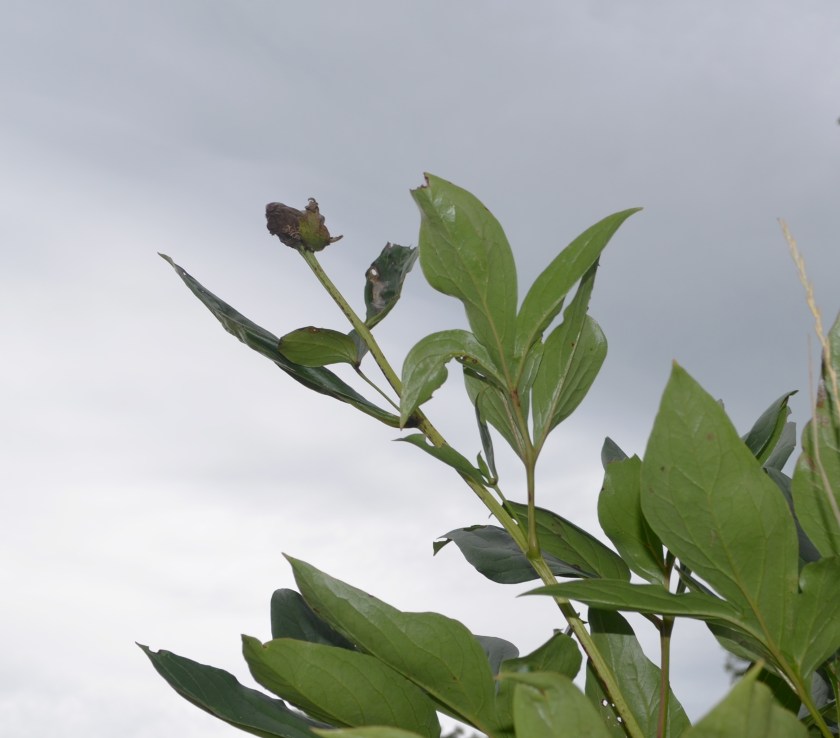
Left today but a dulled and tattered green stood against a gray summer sky, your red flowers only memories.
Who sees your aged presence as beauty?
Who knows the real hope held for new springs of lush joy?
Sadness for those who don’t know; sadness for those amazed only in blossomed days.
Dulled and tattered green stood against a gray summer sky, your red flowers not needed.
Today, aged wonders stood in summer elegance.


The summer mature

Each July has that day when we wake to see summer start to wrinkle with age, its face’s youthful freshness yielding to a weathered ruddiness after too many hours of sun and wind exposure. Summer, we know that day, has pulled us into its greatest depths of heat and humidity despite its inability to show its vulnerability.

The season can’t hide its midlife crisis.

We don’t always notice changes such as those that day presents. It’s like not noticing ourselves aging because we see ourselves in the mirror each day – but old friends who haven’t seen us in a while taking quick note about how much we’ve aged.

I notice it here in the northern Driftless Area when I step outside and see corn tassels poking through the top of the early morning haze hanging over the cornfields rolling up and down Eimon Ridge. Those tassels have set into motion the corn’s final processes – moving it from youthful survival and growth to the noble and mature business of creating nourishing seeds.

Seeing the tassels is a signal for me to look in other directions for signs that July’s turnaround day has arrived.

I look down and see the previous night’s dewy sweat glistening on white clover heads, the blades of grass that had been so lush with green having started a mid-summer rest that allows the clover to thrive. The lawn, overall, has become an uneven green sprinkled with a bit of brown and yellow to go with the clover’s white.

Over in a road ditch I see only remnants of the purple clover that a couple weeks ago had been bursting with sweetness. Some of the purple remains, but it’s become less inviting for a farm boy to chew and even less enticing for bees to visit.

The Timothy grass that May and June give us to chew has turned into brittle toothpicks, its seeds starting to drop with every touch.

A grasshopper, still sporting most of its summer green, appears out of the grass and hops across the road. Its appearance makes us remember childhood days of seeing the sticky-footed critters bounding around oats-filled bins, one of the most certain signs that the summer has climbed across the line fence.

One of the local farmers drives through with a combine. The harvests have gone from sweet smells of the first freshly cut hay to the seemingly endless season of second-crop and third-crop haying, with thoughts of crunchy-dry grain harvests coming to mind.

Even the tasseled corn’s leaves’ wind-whispers are getting louder, sometimes overwhelming the whispers heard from nearby trees.

I take a drive and see that even the summer’s road construction has taken a new look. Though such projects are seemingly endless, that July day’s work signals the construction is getting closer to completion than it is to the commencement.

Early summer trips have been completed for many folks I know in our region, them staying home more to celebrate summer’s final weeks with the first thoughts of a new school year starting to enter minds.

Summer sports leagues are heading toward championships.

Crickets make nightly calls for those among us who still can hear them.

We realize a need to arrive at Buena Vista for the brilliant sunsets closer to 8 p.m. than 9 p.m., the moments of daylight waning by a couple minutes every day.

The day tells me the planning is heavy for our late-summer community celebrations.

It would be easy to feel dismay when that July day arrives, us thinking about summer seeming to be passing so quickly. But those who take time to pay attention to this countryside’s ridges and coulees know there’s plenty of summer left, complete with some good spurts of so-hot-and-humid-you-can-hear-the-corn-grow days and with a few cool autumn-like nights.

We see the northern Driftless summer maturing, and it’s up to us whether we want to make the best of what’s left of it or whether we simply want to get the coming weeks out of the way in autumn’s favor.

— Scott Schultz

The loam magnetic

The soil has plenty of magnetic pull, I’ve been noticing as my years progress. It’s been pulling me more closely to it by the day.

There are the obvious and medical reasons for that happening, of course. During much earlier days I studied how we all physically shrink a little each day after having stood our tallest and most upright. Life’s wear and tear on muscles and joints give us that truth.

It also would be easy for some of us to joke about the earth’s magnetic pull increasingly having its way with metal screws and joints we’ve had planted into our bodies to hold us together over the years. But here, I’m talking about the sort of magnetic pull that eludes our comprehension – that sort of pull that reaches out of the soil and grabs us by our very hearts, souls and spirits to tug us back into the loam.

It’s as though the soil is telling us to get home, where we belong.

Those of us reared on the rural countryside’s soil know how we rose from that loam, figuratively and literally. In the earliest of our years, we spend time digging into Mother Earth around our farmyards to replicate what our parents and perhaps older siblings do with machinery out in the fields; digging foxholes to fight imaginary military foes; using sticks to draw pictures into the dirt.

We make mud pies that we sometimes eat by chance or by design to nourish our curiosities.

As children, we unwittingly give in to the soil and allow it to manage us.

And then, as we grow, all of us work to flip that management picture, us trying to show how we know so well what’s best for that soil. We mold the loam and all beneath to fit our conveniences and needs; we add and remove nutrients natural and synthetic; we take all the soil’s layers from where nature placed them in the name of resources for our wants.

We grow crops that we eat only by design to nourish our bodies.

As adults, we wittingly take from the soil and demand that we manage it.

And then, as we get older, we find that the soil always will know best. We pause to smell its mustiness; we reach to touch it for no reason; we find excuses to work in our gardens to be nearer to it. We take time to reflect about the beauty that it is, instead of the beauty in what it could be; we cherish how it holds plants’ roots and our roots. We long to protect it.

We grow appreciation that we eat by chance or by design to nourish our spirits.

As older adults, we unwittingly give in to the soil and allow it to manage us.

I suppose there’s a great likelihood that many folks don’t notice the time when the soil starts calling us to return. But I’ve felt the pull as my summer days shorten and my physical being starts teetering – or already has tipped — toward its autumn.

Of late, the time I spend in our gardens seems more precious than ever. There, the soil seeps under my fingernails and into my hands like a medicine show’s greatest life-giving ointment.

I’ve had the urge to sit child-like out among the tall grasses to regain a bit of the summer innocence that’s been given and taken by life’s daily grind.

I’ve given in to the soil pulling me onto the lawn’s grass in the shade beneath our old catalpa trees, the loam allowing me to alternate between a novel’s words and gazing up at wispy clouds brushed against the azure above.

And oh, how I gaze across the ridges and coulees in wonder at the goodness the glaciers left touched across this northern Driftless Area.

Those of us who allow ourselves to feel the soil drawing us back into it know the contentment, fear and joy it triggers – the acknowledgment of life and mortality all rolled into one emotion. So often during our extended years we’ve heard, after all, “All are from the dust, and to dust all return.”

I’m in no particular hurry to get fully back to the dust, me rather enjoying the way things are going on this side of the sod. But I’d be a fool to not acknowledge realizing that the soil wants us more than some folks would like to admit.

In the meantime I’ll continue to enjoy the life we’ve been building out here on Eimon Ridge, giving an occasional nod to the soil’s magnetic pull.

And a strong pull, it is.

— Scott Schultz

A fireside chat

He slowly inhaled a large breath of the evening’s cool air. Each measure of the life-giving oxygen he drew could be seen as it fed through his corpuscles, first in deep amber, then in red and then healthy glowing pink.

A slight wheeze could be heard the air moved, his aged cells having turned rough and brittle. Whatever moisture that remained in him sputtered with subtle aquarium-pump gurgles.

He held the breath for a few moments, seeming to consider whether it would be good to allow something so good to leave his being. But as the breath’s oxygen was spent, he released it back into the air for the nearby trees to snatch and rejuvenate with more oxygen to be used in future breaths. The glowing pink, and then the red and deep amber, left with the exhale.

And then it was repeated, another deep breath with renewed life and color. Another exhale.

Thoughtful, he was, listening to those around him babble with their nonsense while he carefully considered what to say. Watching him breathe had a sort of hypnotizing effect that drew senses toward him, and then into him. With every inhale, he reached within and touched the soul – first cautiously touching it to allay fears, then gently wrapping his fingers around it. And then, like a thief in the surrounding darkness, he withdrew the soul, and bared it for all to see. His intent wasn’t to harm the soul, but only to open it to life’s truths. He then gently soaped the soul in gently warmed water to wash away the grime of the daily worries soiling it.

It’s easy then, your soul in his care, to become mesmerized by his actions.

But as quietness and stillness grew, he surprised with a bull-whip’s snap that called the need for those mesmerized to pay attention. He had something to say.

He turned aside and spat, more of habit than of need, to assure that he had his audience’s complete attention. The bull-whip snapped again, and he threatened the sting of a white-hot coal unto anyone not listening.

Finally, he spoke in a rough whisper quieted to not disturb the owl that started its own discourse from a nearby tree. The sound of his voice brought sporadic light applause from the surrounding leaves; applause polite to fit the moment without whistles or yells. The depth of what he would say, the leaves knew, required digestion that would make his fans want to yell, “Bravo! Bravo!” not this night, but tomorrow.

His words came clearly, with the air of those spoken only by the most learned teachers. There are learned who can’t teach, and teachers who aren’t learned, but he what he spoke immediately made it apparent that he certainly was learned and certainly could teach.

The words were firm, gentle, joyous and melancholy all within each thought.

He spoke to his audience about things that should be known, things that shouldn’t be known; about youth lost, youth still held; about pains, pleasures; about love lost, love found; about lows, highs; about sickness, health; about debts, riches; about coldness, passion; about the past, present and future.

He tickled smiles and he pricked tears.

The depth of his inhales and exhales intensified as he spoke, taking his complexion far beyond its previous ambers, reds or pinks. The moment turned him a pulsating white-blue with heat – colors that in another setting might mean cold or death, but which then sparked the peak of living. That life visibly swirled within him, his soul’s ghosts revived with each thought he espoused.

The audience intently listened to all he said. Each time he’d spoken, all walked away feeling better than before, and this night promised to be no different.

Listeners always learned more about themselves, others and the land than they knew before listening to him.

Though he would have so much more to say, his audience could stay no longer. Lost in his messages, the audience hadn’t realized the late hour that brought the night’s dew onto brows. Even the owl had concluded its speech, perhaps in favor of a seeking that night’s dinner. Gnats and mosquitoes earlier omnipresent had given up their bloodthirsty quests and disappeared into the blackness.

Fireflies that earlier provided a disco-ball background to his teachings had ascended to add to the Milky Way’s twinkles.

Understanding the need for his audience to depart, he quieted into midnight’s stillness. His breathing slowed. Without speaking, he decided to have a late-night smoke – unfiltered – and on an exhale blew rings of smoke toward his departing audience.

On the smoke he returned the souls he’d taken under his care. Though cleansed, the souls re-entered their hosts much more clumsily than they’d been withdrawn, stinging eyes and irritating coughs.

There would be other nights for him to say more, other nights for him to cleanse and give care to souls. But for then he was left alone in the early morning darkness to enter an ashen slumber.

— Scott Schultz